

Research
Chemical disorder opens an enormous space for materials design. When many elements share a crystal lattice, both composition and atomic arrangement can be varied. The number of possibilities quickly becomes too large to explore one material at a time.
We develop AI and computational methods that learn from these spaces and propose new materials for nuclear energy, hydrogen production, chemical manufacturing, and extreme environments. Our goal is to move beyond brute-force screening toward models that can generate materials with the chemistry and atomic structure needed for a particular function.
Students in the S4E lab can follow a material from computational prediction through synthesis and experimental testing. Our current research centers on AI-driven materials design, materials for fission and fusion, quantum computing for materials, and hydrogen production.
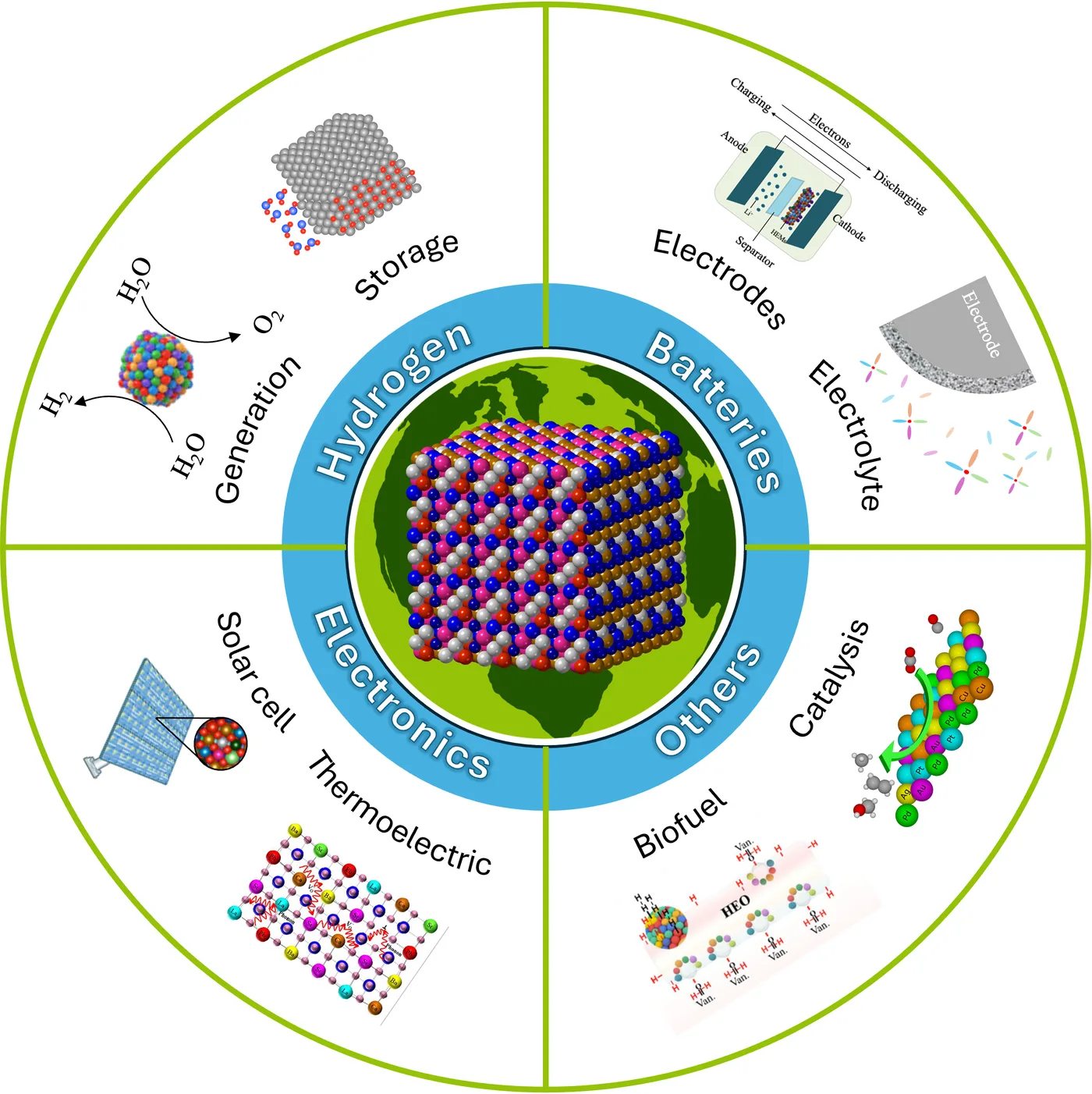
AI-driven materials design
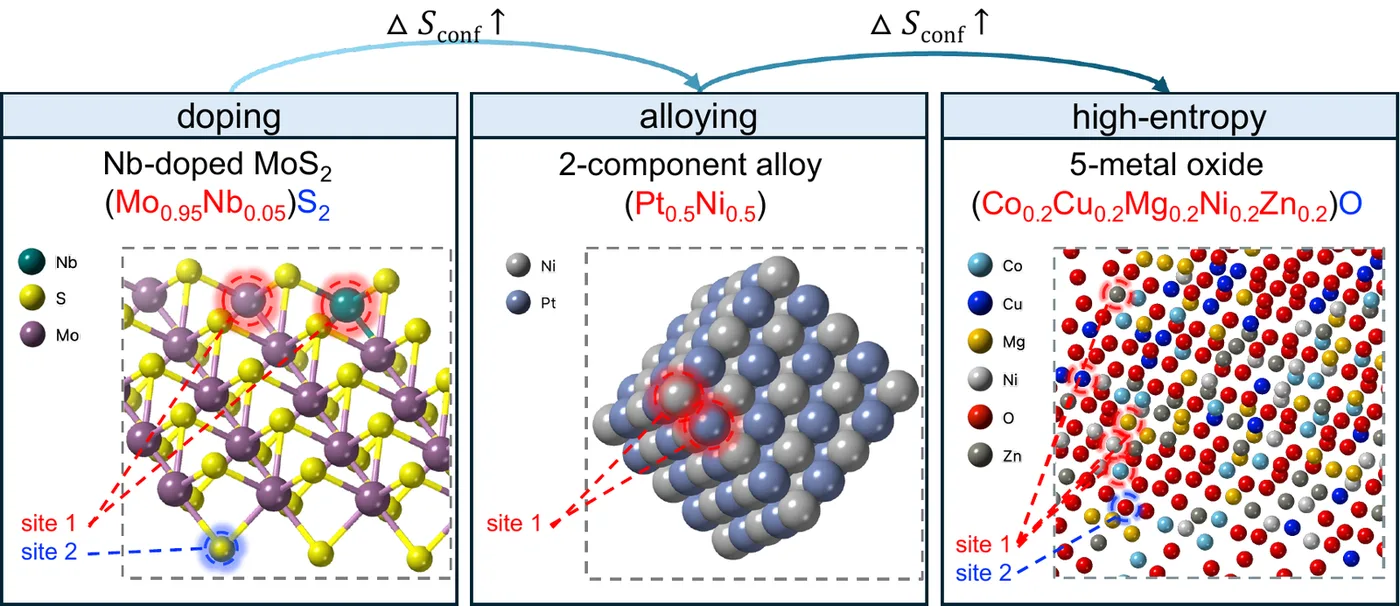
AI is changing what is possible in materials design. Disordered materials present a particularly difficult challenge because a single composition can contain many different atomic arrangements, and the properties that matter often depend on which arrangement forms.
We build AI models that learn both which elements belong in a material and how those elements arrange themselves at the atomic scale, and we test what those models get right and wrong against first-principles calculations. This creates a path from predicting known materials to generating new ones with targeted chemistry and disorder, and from prediction to synthesis and testing in the laboratory.
Students in this area work at the intersection of materials science, physics, AI, and scientific computing. Projects can involve electronic-structure calculations, machine-learned potentials, molecular dynamics, large-scale materials data, generative modeling, and open scientific software.
- Structural benchmarks overlook density-of-states errors in machine-learned interatomic potentials, APL Mach. Learn. (2026)
- Beyond the four core effects: revisiting thermoelectrics with a high-entropy design, Mater. Horiz. (2025)
- High entropy powering green energy: hydrogen, batteries, electronics, and catalysis, npj Comput. Mater. (2025)
Materials for fission and fusion
Growing electricity demand will require enormous amounts of reliable power, and nuclear energy is central to meeting it. Fission is one of the few technologies already capable of supplying electricity continuously at that scale; fusion, if it can be made practical, would supply it with abundant fuel. Both depend on materials that survive conditions found almost nowhere else in engineering.
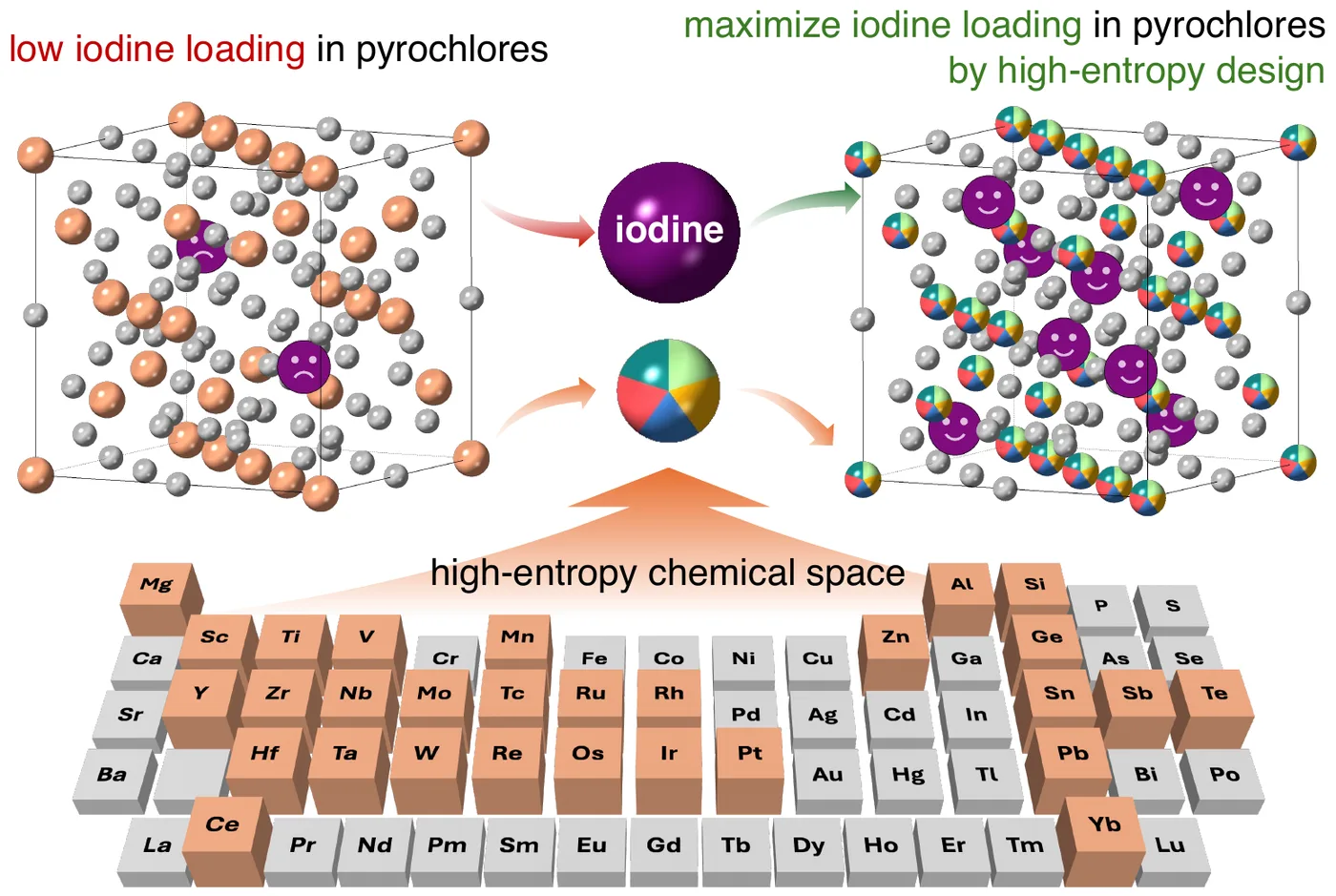
For fission, the open problems are materials that operate safely for decades and durable approaches to nuclear waste. In recent work we demonstrated for the first time that iodine, one of the most difficult radionuclides to immobilize, can be incorporated directly into the crystal lattice of a pyrochlore, and we use high-entropy design to raise how much a waste form can hold.
For fusion, components near the plasma face intense heat, particle bombardment, and neutron damage at the same time. We use AI-driven design to find chemically complex alloys and ceramics for these environments, moving from computational screening to synthesis and testing with collaborators.
Research in nuclear materials spans phase stability, defect chemistry, radiation effects, first-principles calculations, machine learning, synthesis, and characterization.
Quantum computing for materials
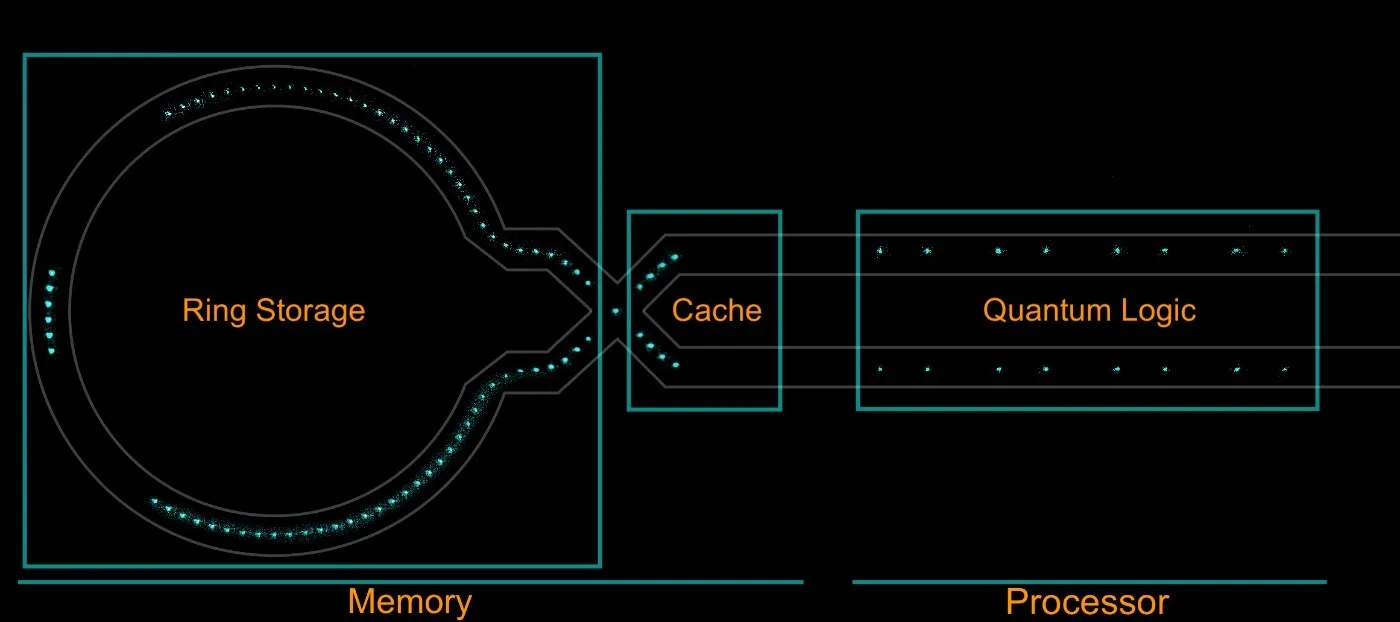
Quantum computers offer a different way to represent and calculate the electronic structure of molecules and materials. As the hardware and algorithms improve, the question for materials science is which problems they can solve that remain out of reach for classical computation.
We focus on applications: identifying materials problems, including catalysis and chemical disorder, where quantum computation could make a difference; casting them in a form a quantum computer can solve; and combining quantum and classical calculations into workflows that produce predictions that can be tested experimentally. The goal is not a better benchmark, but a material or mechanism that would otherwise have been difficult to find. In February 2026, we hosted a two-day workshop with Quantinuum that gave researchers from across Johns Hopkins hands-on experience with quantum hardware and software.
Students in this area learn quantum algorithms for chemistry alongside classical electronic structure and gain experience with the software and hardware used in current quantum-computing workflows.
Hydrogen production
Hydrogen is a backbone of the energy and chemical industries. It is used at enormous scale in refining, chemical manufacturing, and fertilizer production, and its role is expanding across energy technologies. Most hydrogen production relies on natural gas, tying its economics to natural-gas prices. Alternative production routes offer greater flexibility in how and where hydrogen is made.
We design materials for producing hydrogen from water using electricity or heat. Machine learning helps us explore complex alloys as alternatives to precious-metal catalysts, and we use first-principles calculations to understand how atomic arrangement changes catalytic behavior.
Students working in this area encounter catalysis, electronic structure, thermodynamics, machine learning, materials synthesis, and experimental characterization.
The group is recruiting at every level, from undergraduates to postdoctoral researchers. See the Jobs page for how to apply.